One-Way Video Interviews: The Ultimate Guide to Screening Candidates Faster
Learn how one-way video interviews can help you screen candidates faster, eliminate ghosting, and find top talent before your competitors. Discover best practices for HR teams.
A one-way video interview (or asynchronous interview) allows candidates to record answers to pre-set questions at their convenience, without a live interviewer present. This helps hiring teams screen candidates faster, eliminate scheduling conflicts, and review responses collaboratively. Using an ATS pre-hire screening tool like VideoPitcher, recruiters can evaluate soft skills and cultural fit early in the process, replacing time-consuming phone screens.
Every hiring team knows the pain of traditional phone screens: endless scheduling, no-shows, and losing top candidates to faster competitors. In 2026, one-way video interviews have emerged as the most effective solution to this problem. By letting candidates record their answers on their own time, recruiters can screen more people, faster, while maintaining a fair and consistent evaluation process.
This guide covers everything you need to know about implementing one-way video interviews in your hiring workflow—from choosing the right questions to integrating with your ATS and avoiding common pitfalls. Whether you are hiring in India, building a remote team, or scaling globally, this approach will give your recruitment team a measurable edge.
Key Takeaways
- ✓One-way video interviews let candidates record responses on their own schedule, removing scheduling bottlenecks completely.
- ✓Recruiters can screen up to 5x more candidates in the same time compared to traditional phone screens.
- ✓Standardized questions ensure every applicant gets a fair, consistent evaluation based on evidence, not interview chemistry.
- ✓Video reveals soft skills, communication ability, enthusiasm, and cultural fit that resumes cannot show.
- ✓Integrating video screening with your ATS automates the workflow and keeps the entire hiring team aligned.
- ✓Providing practice questions and allowing retakes significantly improves candidate experience and completion rates.
The High Cost of Traditional Phone Screens
For decades, the initial hiring process looked like this: a recruiter sifts through hundreds of resumes, shortlists candidates, and spends hours playing 'scheduling Tetris' to book 30-minute phone calls. The reality? Over 50% of a recruiter's time is wasted just trying to coordinate these early-stage interviews. By the time they actually speak to candidates, top talent might already be interviewing with competitors.
This manual back-and-forth scheduling causes significant delays in the hiring pipeline. It increases the time-to-hire metric and leads to higher rates of 'candidate ghosting'—where applicants lose interest because the process is simply too slow. For companies hiring at scale, especially across India and global markets, the problem multiplies with every time zone, every team, and every open role.
The cost is not just time. Every day a role stays unfilled, the business loses productivity, revenue, and team morale. According to industry benchmarks, the average cost-per-hire can range from ₹50,000 to several lakhs depending on the role and seniority. Reducing the time spent on initial screening directly impacts these numbers.
What is a One-Way Video Interview?
A one-way video interview (frequently referred to as an asynchronous interview, on-demand interview, or pre-recorded video interview) is an innovative screening method that allows candidates to record answers to predefined questions on their own time. There is no live interviewer present on the other side of the screen.
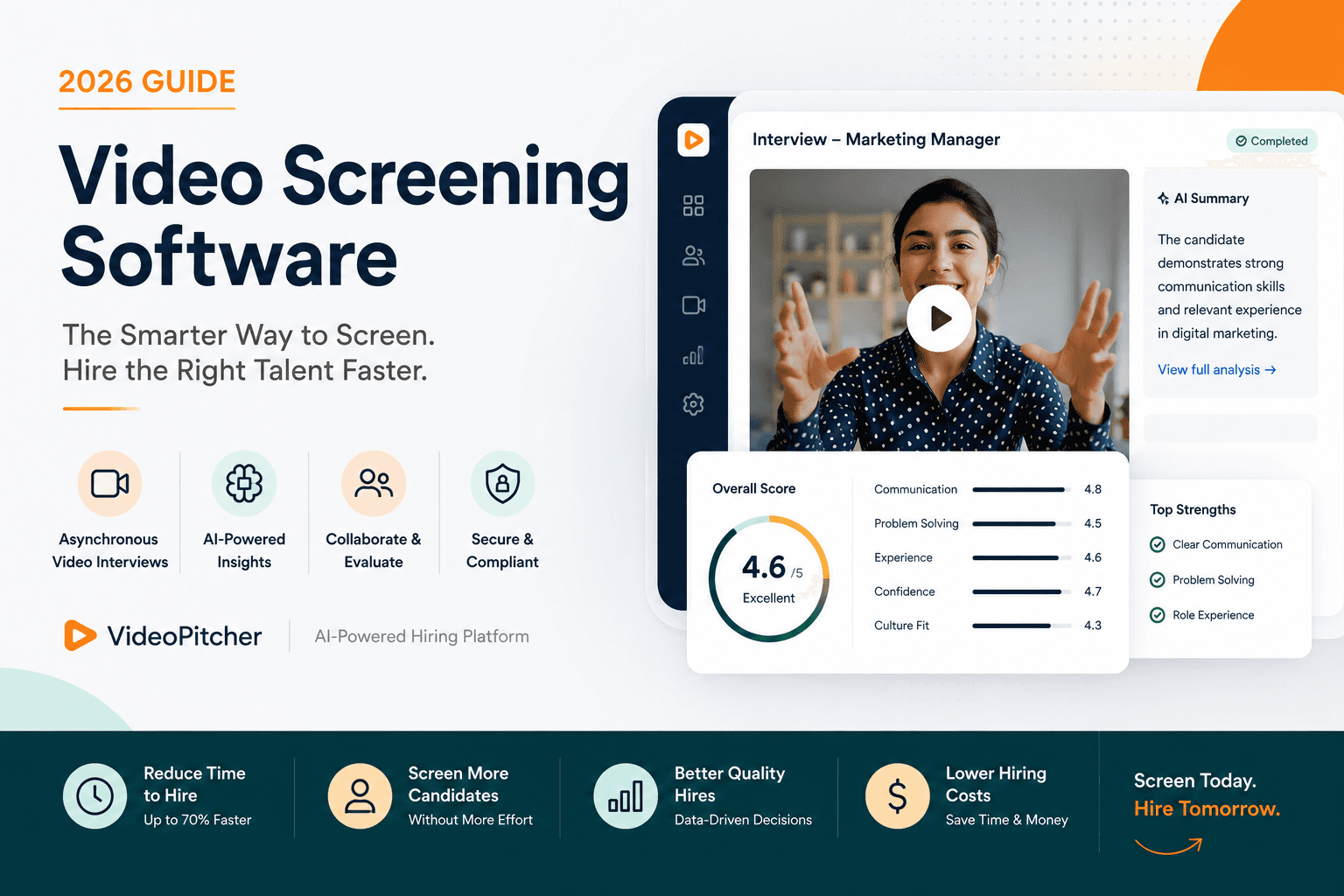
Instead of trying to find a mutually agreeable time to chat, the hiring manager sets up a series of text or video-based questions. The candidate receives an invitation link and completes the interview using their smartphone or computer webcam. Using an advanced ATS pre-hire screening platform like VideoPitcher, hiring managers can review these video responses at their convenience, share the best ones with their team, and standardize the evaluation process.
Unlike live video calls on Zoom or Google Meet, one-way interviews are not real-time. The candidate records their answers independently, and the recruiter watches the recordings later. This fundamental difference is what makes asynchronous video screening so powerful for high-volume hiring.
How It Works in Practice
- ✓Setup the Assessment: The recruiter configures 3-5 text or video questions tailored to the specific role, sets time limits for each response, and customizes the welcome message.
- ✓Invite the Candidate: Candidates receive a secure, branded link via email or SMS. No app download or account creation is required.
- ✓Candidate Records: The candidate completes the interview at their own convenience—morning, evening, or weekend—via their browser or mobile device, often practicing before submitting their final response.
- ✓Review on Demand: The hiring team watches the recordings asynchronously, skipping through or re-watching key responses as needed without coordinating schedules.
- ✓Score and Collaborate: Reviewers use a standardized rubric or scorecard to rate the candidate, share their evaluations with the team, and avoid the bias common in unstructured live interviews.
Key Benefits of One-Way Video Interview Software for HR Teams
Implementing one-way video interviews can completely transform an organization's talent acquisition strategy. Whether you are a startup hiring your first sales team or an enterprise screening hundreds of applicants per week, the advantages are substantial and measurable.
1. Eliminates Scheduling Bottlenecks
No more coordinating calendars across multiple time zones. Recruiters save hours every week that were previously lost to scheduling conflicts, rescheduling, and no-shows. Candidates in India, Europe, and the Americas can all complete their screening without any scheduling overlap.
2. Reduces Time-to-Hire Dramatically
By removing the scheduling friction from the first screening round, you can move candidates from application to final interview days or even weeks faster. Companies using asynchronous video screening report a 40-60% reduction in time-to-hire for roles that previously relied on phone screens.
3. Consistent, Standardized Screening
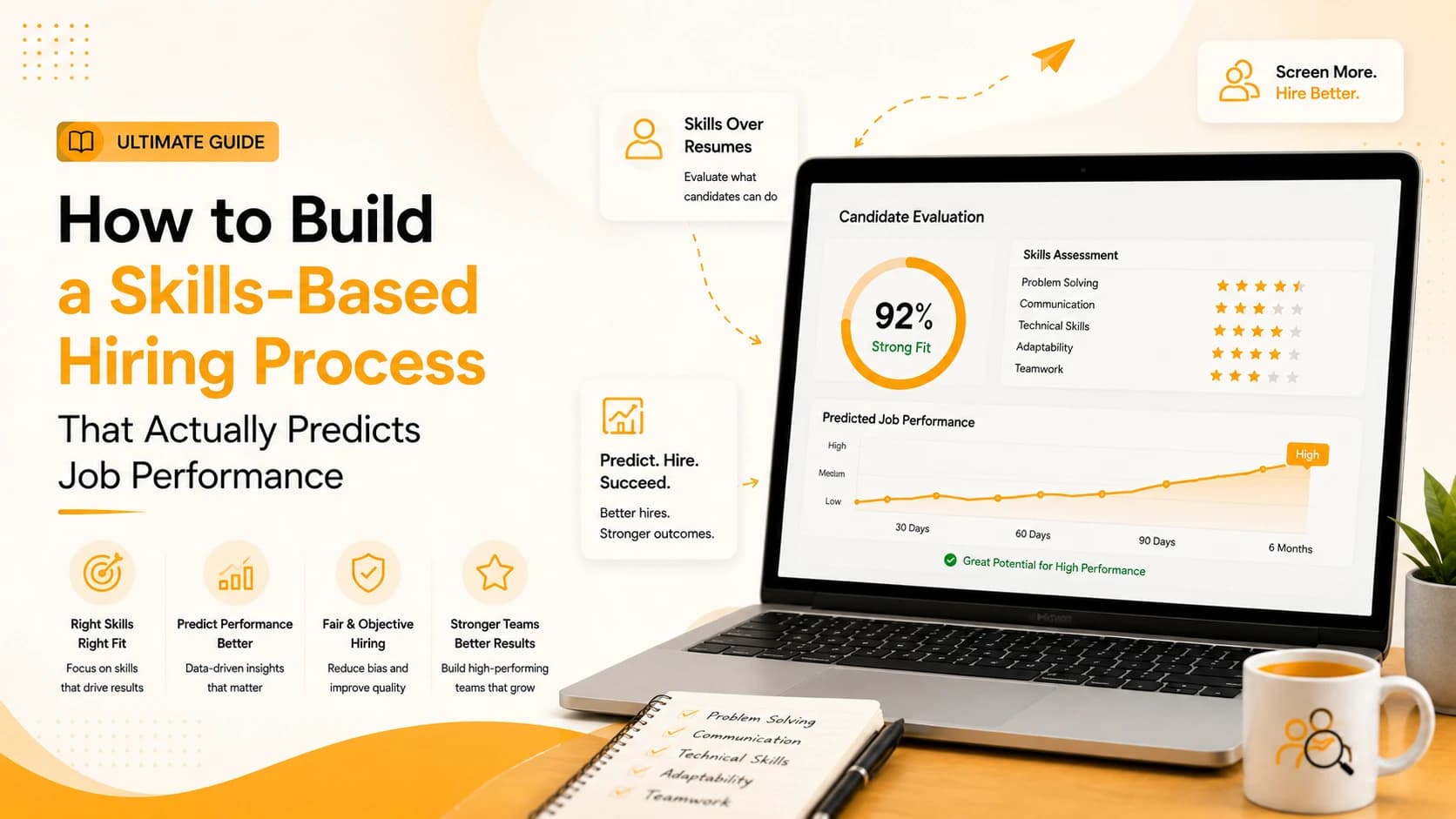
Every single candidate is asked the exact same questions in the exact same format. This removes the variability that comes with different recruiters asking different questions in different moods on different days. The result is a fairer, more equitable hiring process that can withstand compliance scrutiny.
4. Better Candidate Experience
Applicants can interview outside of working hours, reducing the stress of taking time off from their current job. They can choose a quiet environment, prepare thoughtfully, and present their best selves—something a rushed phone call rarely allows.
5. Collaborative Team Hiring
Hiring managers can review recorded videos together, share video links with stakeholders who were not part of the initial screening, and avoid the bias of relying on a single recruiter's handwritten notes. This is especially valuable for distributed teams where the hiring manager and the recruiter are in different offices or cities.
6. Identify Soft Skills Early
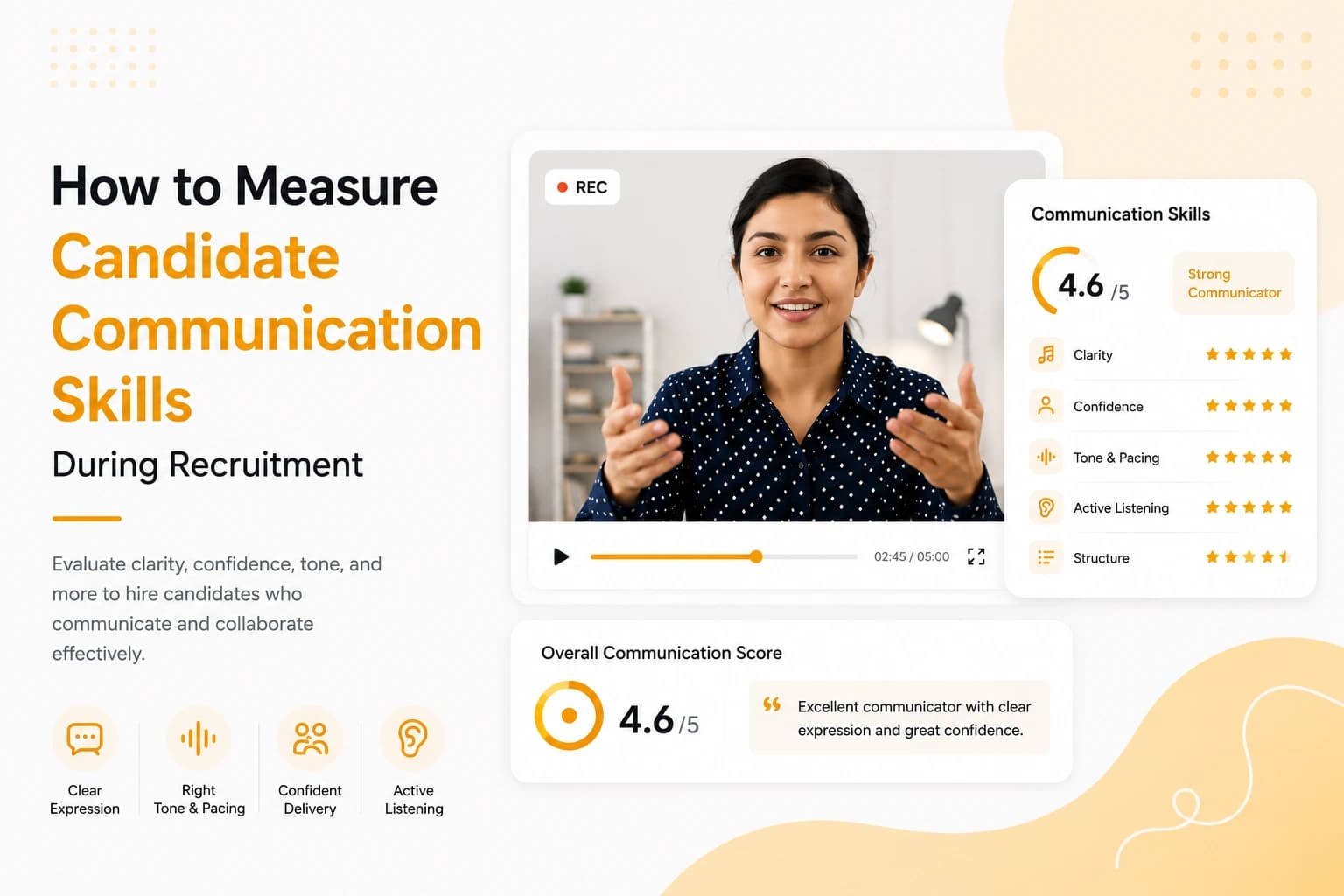
Resumes don't show communication skills, enthusiasm, problem-solving under pressure, or cultural fit—but video does. A 60-second video response can reveal more about a candidate's confidence, clarity, and energy than a 2-page resume ever could.
How to Ask the Right One-Way Video Interview Questions
Because a one-way interview lacks the back-and-forth flow of a live conversation, the questions you ask must be incredibly precise. Vague or overly broad questions will produce vague, unfocused answers. Instead, focus on behavioral and situational inquiries that reveal specific competencies.
Here are examples of highly effective questions for asynchronous screening, organized by role:
Sales Roles
'Pitch our product as if you are speaking to a potential enterprise client who has never heard of us.' This tests product understanding, communication clarity, persuasion, and the ability to think on their feet.
Customer Success Roles
'Describe a time you had to deal with a particularly frustrated customer. Walk us through exactly what you said and did to de-escalate the situation.' This reveals empathy, composure, and problem-solving ability.
Engineering Roles
'Explain a complex technical concept you have worked with recently to a non-technical stakeholder. Assume they have no engineering background.' This tests the ability to simplify complexity—a critical skill for cross-functional engineering roles.
Leadership Roles
'Walk us through your framework for prioritizing multiple high-stakes projects with competing deadlines and limited resources.' This evaluates strategic thinking, organizational skills, and decision-making under pressure.
Overcoming Candidate Anxiety in Asynchronous Interviews
While recruiters love one-way video interviews for their efficiency, some candidates may initially feel nervous talking to a screen without any human feedback. This is a valid concern, and the key to a successful implementation is designing an empathetic, candidate-first experience.
Research shows that candidate completion rates for one-way interviews range from 60% to 85% depending on how well the experience is designed. Companies that invest in a polished, welcoming flow consistently see completion rates at the higher end of that range.
Best practices to reduce candidate anxiety and boost completion rates:
- ✓Always provide a practice question so candidates can test their microphone, camera, and lighting before the real assessment begins.
- ✓Allow retakes—for example, 'You have 2 attempts for each question'—to reduce the pressure of being perfect on the first try.
- ✓Include a welcome video from the hiring manager or recruiter to humanize the process and explain exactly what the team is looking for.
- ✓Keep the total assessment under 15 minutes with no more than 5 questions to prevent drop-offs.
- ✓Be transparent about how their video data will be used, stored, and who will see it.
- ✓Send a confirmation email after submission so candidates know their responses were received successfully.
Integrating Video Screening with Your ATS
For maximum efficiency, your one-way video interview software should integrate seamlessly with your Applicant Tracking System (ATS). When a candidate applies through your careers page or a job board, the ATS should automatically trigger the video assessment invite without any manual intervention from the recruiter.
Once the candidate completes the assessment, the video link, responses, and any AI-generated scores or transcripts should map directly back to the candidate's profile in the ATS. This eliminates manual data entry, prevents candidates from falling through the cracks, and ensures that the entire hiring team has access to the video responses in one centralized location.
VideoPitcher is designed as a standalone pre-hire screening tool that works alongside your existing ATS workflow. Recruiters can send assessment links directly from the platform, track candidate progress in real-time, and share video responses with hiring managers—all without leaving their browser.
One-Way vs. Two-Way Video Interviews: What's the Difference?
It is important to distinguish between one-way (asynchronous) and two-way (live) video interviews, as they serve different purposes in the hiring funnel:
| Feature | One-Way (Async) | Two-Way (Live) |
|---|---|---|
| Scheduling Required | No | Yes |
| Interviewer Present | No | Yes |
| Best For | Initial screening (Round 1) | Deep-dive interviews (Round 2-3) |
| Time Investment per Candidate | 2-5 minutes to review | 30-60 minutes live |
| Candidate Flexibility | Complete anytime | Fixed time slot |
| Scalability | Excellent (screen hundreds) | Limited by interviewer availability |
| Bias Reduction | High (standardized questions) | Moderate (depends on interviewer) |
The most effective hiring funnels use both: a one-way video screen to efficiently filter candidates in Round 1, followed by a live two-way interview for the shortlisted finalists in Round 2 or Round 3.
Common Mistakes to Avoid with One-Way Video Interviews
Watch out for these pitfalls when implementing asynchronous screening:
- ✓Asking too many questions: Keep it to 3-5. Assessments longer than 15 minutes see a sharp drop in completion rates.
- ✓Not providing context: Candidates should know the role, team, and what skills you are evaluating before they start recording.
- ✓Evaluating appearance over substance: Score the content of the answer—evidence, structure, reasoning—not the candidate's background, accent, or camera quality.
- ✓Skipping the practice question: Candidates unfamiliar with the format need a warm-up to feel comfortable.
- ✓Using generic questions: Avoid 'Tell me about yourself.' Instead, ask role-specific questions that reveal job-relevant competencies.
- ✓Not closing the loop: Always send candidates a status update, whether they advance or not. Ghosting candidates damages your employer brand.
Conclusion: The Future of Pre-Hire Screening is Asynchronous
Transitioning to one-way video interviews is one of the easiest and most impactful ways to modernize your hiring funnel in 2026. It removes friction for both recruiters and candidates, provides deeper insights into soft skills much earlier in the process, and drastically reduces time-to-hire—all while creating a more consistent and fair evaluation standard.
Whether you are scaling a startup in Bangalore, building a remote team across India, or hiring globally, asynchronous video screening gives you a competitive edge in the war for talent. The companies that adopt this approach today will hire faster, hire better, and build stronger teams.
Ready to speed up your screening process, eliminate ghosting, and build a more collaborative hiring culture? Explore VideoPitcher today to see how powerful asynchronous video screening can be for your talent acquisition team.
Scorecard — implementation checklist
- Define the role requirements and identify 3-5 key competencies to evaluate through video.
- Write clear, role-specific questions that test communication, problem-solving, and job-relevant skills.
- Set up the assessment in VideoPitcher with time limits, practice questions, and a branded welcome message.
- Send assessment invites via email or SMS with clear instructions and a deadline.
- Review and score candidate responses using a standardized rubric or scorecard.
- Share top candidates with the hiring manager and schedule live interviews for finalists.
- Send status updates to all candidates—including those who are not advancing.
Frequently asked questions
What is a one-way video interview?+
A one-way video interview is an asynchronous screening method where a candidate records their responses to pre-determined questions via their webcam or smartphone. There is no live interviewer present. Reviewers watch these recordings on their own schedule and score candidates using a standardized rubric.
How long should a one-way video interview be?+
Keep assessments under 15 minutes with 3-5 focused questions. Each question should have a time limit of 1-3 minutes. Shorter assessments consistently achieve higher completion rates and a better candidate experience.
Do candidates prefer one-way video interviews?+
When designed well, most candidates appreciate the flexibility of recording at their convenience. Providing practice questions, allowing retakes, and including a welcome video from the hiring manager significantly improves candidate satisfaction with the process.
Can one-way video interviews replace phone screens?+
Yes. One-way video interviews are designed to replace or supplement phone screens in the initial screening round. They provide richer signals about communication, soft skills, and cultural fit while eliminating scheduling bottlenecks. Most companies use them as a Round 1 filter before live interviews.
How does VideoPitcher support one-way video interviews?+
VideoPitcher is an ATS pre-hire screening platform that lets recruiters create video and text assessments, send branded invite links, and review candidate responses collaboratively. It supports both public and private assessment links, AI-assisted scoring, and works alongside your existing ATS workflow.
Written by VideoPitcher Editorial Team
Talent Acquisition & HR Technology Desk
Published August 27, 2026
Keywords covered
Related resources
Ready to transform your hiring process?
Start using VideoPitcher today with 20 FREE AI Video Screening Credits, plus Unlimited AI Resume Analysis and Unlimited Text Screening Assessments. No credit card is required—just start screening smarter and find the right candidates faster.