How to Build a Skills-Based Hiring Process That Actually Predicts Job Performance
Learn how to build a skills-based hiring process that evaluates real job skills, reduces hiring bias, and helps predict candidate performance before making an offer.
A skills-based hiring process evaluates candidates based on the competencies and abilities required to perform a specific job rather than relying primarily on degrees, job titles, or years of experience. By identifying critical skills, creating structured assessments, using consistent scoring criteria, and combining practical tasks with behavioral questions, hiring teams can make more objective decisions and improve their ability to predict future job performance.
Hiring based primarily on resumes, degrees, previous job titles, and years of experience can tell you where a candidate has been—but it does not always tell you what they can actually do. A skills-based hiring process changes that equation by evaluating the competencies that matter most for success in the role.
Instead of asking whether a candidate looks qualified on paper, skills-based hiring asks a more useful question: can this person demonstrate the skills required to perform the job? By combining clearly defined competencies, structured interviews, practical assessments, and consistent scoring, hiring teams can make better decisions and create a stronger connection between what they evaluate before hiring and what employees actually need to deliver after joining.
Key Takeaways
- ✓Skills-based hiring evaluates what candidates can actually do, not just where they have been.
- ✓Defining 3–7 critical competencies before interviews begin creates a consistent, evidence-based evaluation standard.
- ✓Structured assessments and behavioral questions produce more job-relevant data than unstructured conversations.
- ✓Consistent scoring criteria reduce the influence of unconscious bias on hiring decisions.
- ✓Combining practical tasks with structured interviews gives the most complete picture of candidate readiness.
- ✓Tracking post-hire performance data closes the loop and lets teams continuously improve their screening process.
Why Traditional Hiring Often Fails to Predict Performance
For decades, hiring teams have relied heavily on resumes, academic credentials, and years of experience as the primary signals of candidate quality. These factors are easy to scan, familiar to evaluate, and deeply embedded in how most applicant tracking systems are designed. But they share a common weakness: they tell you where someone has been, not what they can do.
Research into hiring accuracy consistently finds that unstructured interviews—where interviewers ask different questions in different orders based on how the conversation flows—have a weak predictive relationship with actual job performance. The same is true of credentials alone. A degree from a prestigious institution or a job title at a recognizable company may correlate with future success in some roles, but neither is a reliable direct measure of the specific competencies the job requires.
The result is a process that often selects candidates based on familiarity, polish, and communication style in a high-pressure interview setting rather than evidence of the skills that actually drive performance. Skills-based hiring addresses this gap directly.
What Is Skills-Based Hiring?
Skills-based hiring is a recruitment approach that places demonstrated competencies at the center of every evaluation decision. Instead of treating a resume as the primary signal of candidate quality, skills-based hiring uses structured assessments, work samples, behavioral interviews, and consistent scoring criteria to determine whether a candidate can perform the specific tasks the role requires.
This does not mean ignoring experience or credentials entirely. It means treating them as context rather than proof. A candidate's past employer and job title may provide useful background, but they only become meaningful evidence of future performance when combined with direct demonstrations of the skills that matter for your role.
Skills-based hiring is also sometimes called competency-based hiring or evidence-based hiring. The terminology varies, but the underlying principle is the same: evaluate what candidates can do, not just where they have been.
Step 1: Define the Skills That Actually Drive Performance
The foundation of any effective skills-based hiring process is a clear, specific answer to the question: what does a successful person in this role actually do, and what capabilities do they need to do it well? This sounds simple, but most job descriptions do not answer it well. They list responsibilities and required qualifications, but they rarely define the specific competencies that separate high performers from average performers.
Start by working with hiring managers, current team members, and recent successful hires to identify the outcomes the role is expected to deliver. Then work backward from those outcomes to the skills and behaviors that produce them. Be specific. 'Strong communication skills' is not a useful competency definition. 'Can explain a complex technical concept clearly to a non-technical stakeholder in under five minutes' is.
How to identify the right competencies for your role:
- ✓List the three to five outcomes the role is most responsible for delivering in the first six months.
- ✓Ask your top performers what skills they use most often and what separates good work from great work in the role.
- ✓Separate must-have competencies from nice-to-have skills that can be developed after joining.
- ✓Limit your critical skills list to three to seven competencies to keep the assessment focused and actionable.
- ✓Write a specific, observable definition for each competency so reviewers can apply it consistently.
Step 2: Create Structured Assessments for Each Competency
Once you have defined the competencies that matter, the next step is creating assessment methods that can actually surface evidence of those competencies in a comparable way across all candidates. This is where most hiring processes fall short. Even teams that define competencies carefully often evaluate them through unstructured conversations where different interviewers ask different questions and draw different conclusions.
A structured assessment uses the same questions, tasks, or prompts for every candidate and evaluates their responses against the same criteria. This consistency is what makes skills-based hiring meaningful. It gives you comparable data points rather than subjective impressions, and it makes it possible to look back at your decisions and measure whether your assessments actually predicted performance.
Behavioral Interview Questions
Behavioral questions ask candidates to describe specific past situations in which they demonstrated a relevant competency. The most effective behavioral questions use a structured format: describe the situation, explain what actions you took, and share the result. This format gives candidates a clear direction and gives interviewers comparable evidence to evaluate.
For example, if you are assessing objection handling for a sales role, a behavioral question might be: 'Tell me about a time a prospect told you the price was too high. What did you do, and how did the conversation end?' A strong answer will describe a specific situation, a concrete action, and a measurable result—not a general description of how the candidate usually handles objections.
Practical Assessments and Work Samples
Work samples and practical tasks are among the most predictive assessment methods available. Rather than asking candidates to describe how they would handle a situation, practical assessments ask them to actually do it. A writing sample for a content role, a data analysis task for an analyst position, or a short role-play for a customer-facing job all give you direct evidence of performance rather than a promise of it.
Practical assessments are most effective when they are realistic, focused, and time-bounded. A 20-minute task that mirrors actual job responsibilities is more useful than an elaborate multi-day project. The goal is to create a representative sample of the work, not to simulate the entire job.
Asynchronous Video Screening
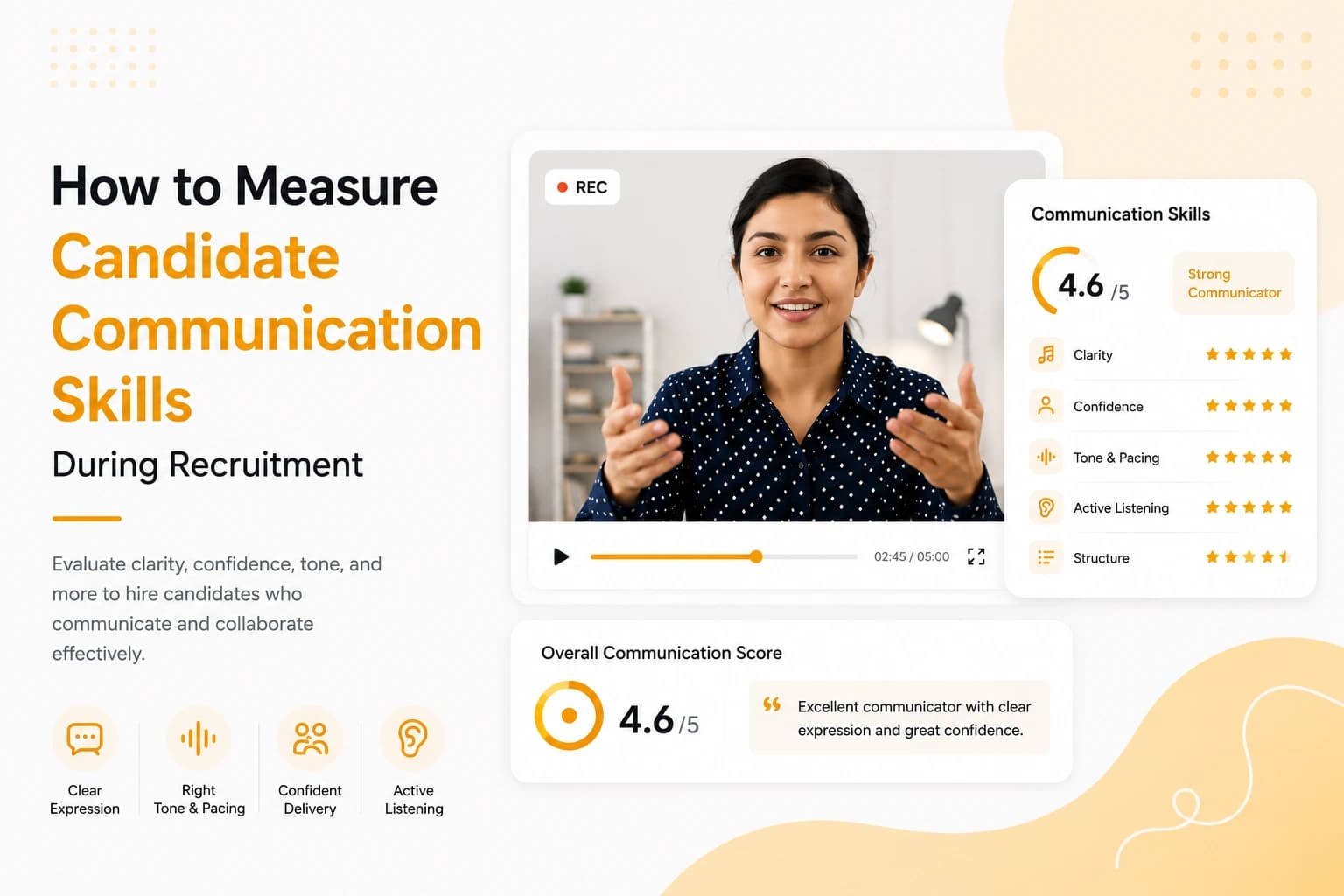
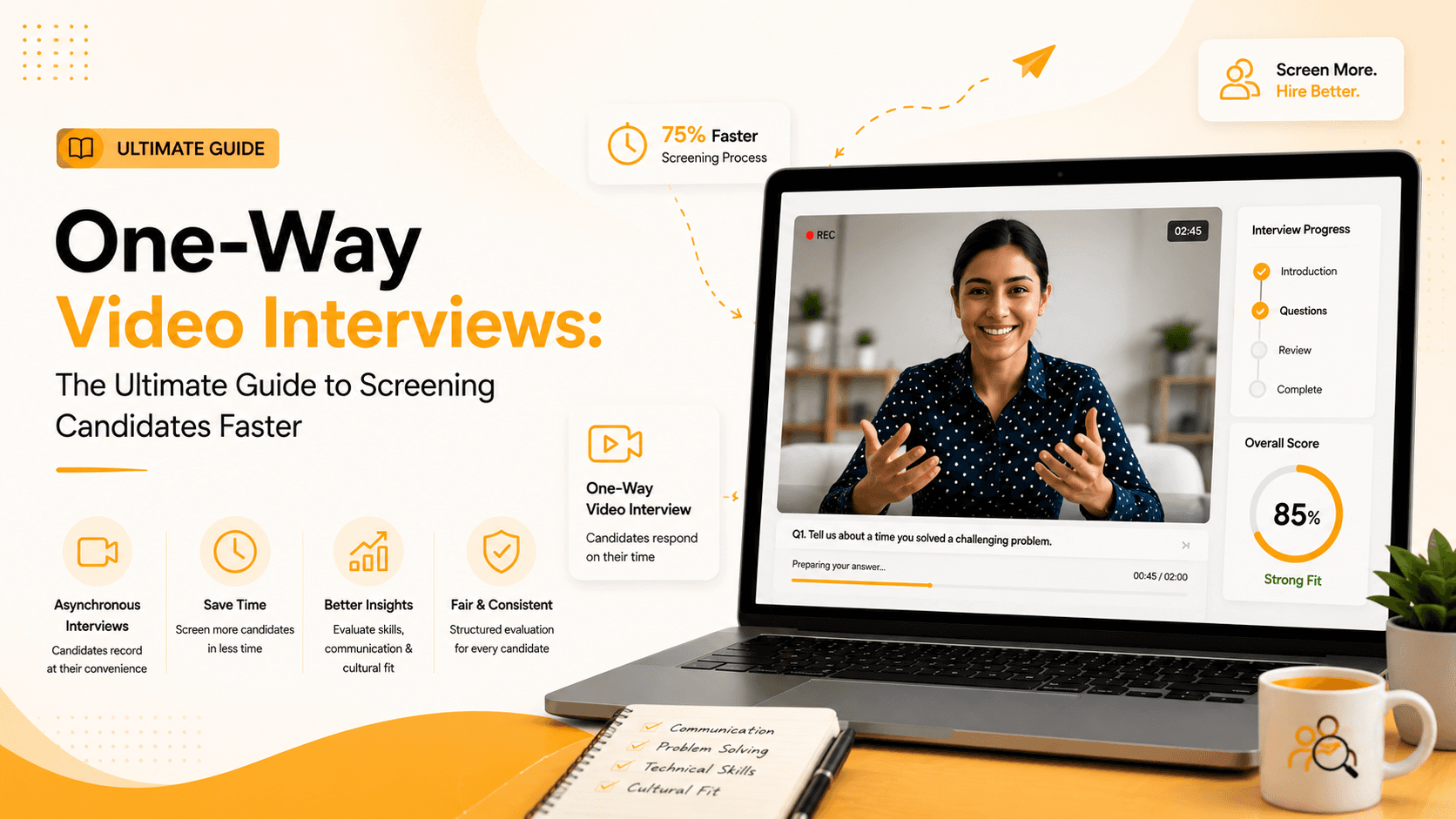
Asynchronous video assessments add another layer of structured evaluation that works especially well for competencies related to communication, presentation, and professional demeanor. Candidates answer role-specific questions on their own schedule and submit recorded responses that reviewers can watch and score using consistent criteria.
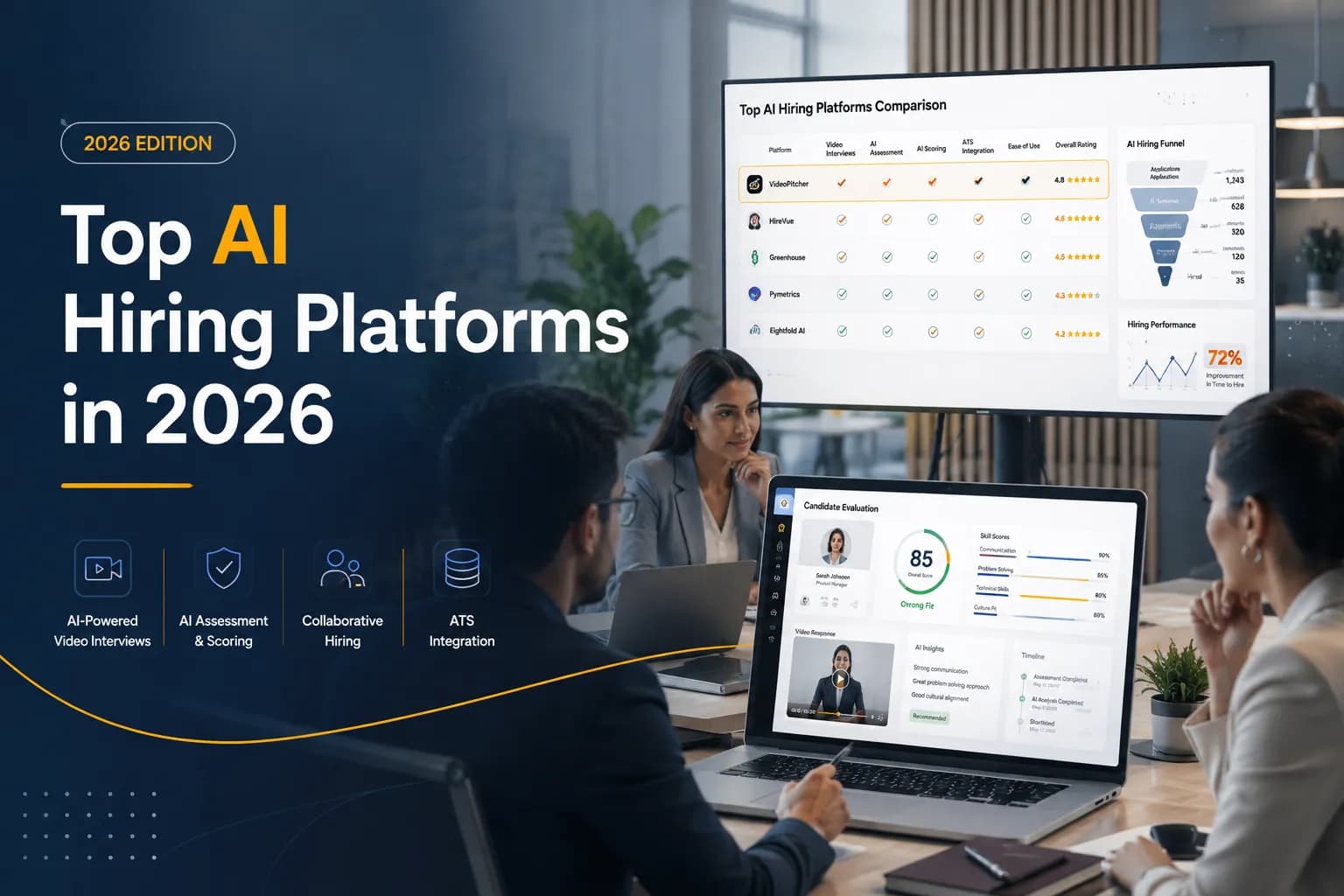
Platforms like VideoPitcher let hiring teams create standardized question sets, collect video and text responses, and share candidate submissions with multiple reviewers for collaborative scoring—all before scheduling a single live interview. This makes it possible to screen more candidates, more consistently, in less time.
Step 3: Build a Consistent Scoring Framework
Defining competencies and creating assessments only works if evaluation is also structured. Without consistent scoring criteria, different reviewers will apply different standards to the same evidence, and the process loses the objectivity that makes it valuable.
A skills-based scorecard defines what evidence looks like at each performance level for every competency being evaluated. Reviewers use the same rubric, applied to the same questions, for every candidate. Scores reflect the quality of the evidence the candidate provided, not an overall impression of the candidate as a person.
| Competency | What Strong Evidence Looks Like | What Weak Evidence Looks Like |
|---|---|---|
| Communication clarity | Concise, structured response with a clear beginning, middle, and conclusion | Rambling or vague answer without a clear point |
| Customer understanding | Connects the customer problem to a specific action or outcome | Focuses on features or product without referencing the buyer |
| Problem-solving | Walks through a structured approach with a clear decision rationale | Describes the outcome without explaining the thinking process |
| Learning mindset | Shares a specific example of changing behavior based on feedback | Gives a general statement about valuing feedback without evidence |
| Collaboration | Describes how they coordinated with others and what they contributed specifically | Claims to be a 'team player' without concrete examples |
Require reviewers to write a brief evidence note for every score they give. This makes the evaluation auditable, reduces the tendency to score based on gut feel, and creates a record that can be reviewed later when measuring hiring outcomes.
Step 4: Design a Multi-Stage Skills Evaluation Funnel
Skills-based hiring works best when it is built into every stage of the process rather than treated as a single screening step. A multi-stage evaluation funnel allows you to gather progressively deeper evidence of critical competencies as candidates advance, while protecting the time of hiring managers and final-round interviewers for the candidates most likely to succeed.
A practical skills-based hiring funnel:
- ✓Stage 1 – Application review: Use structured criteria to screen for minimum qualifications and relevant experience. Avoid relying on credential signals alone.
- ✓Stage 2 – Asynchronous video or text screen: Ask three to five role-specific questions that assess communication, motivation, and early indicators of key competencies. Score using a shared rubric.
- ✓Stage 3 – Structured behavioral interview: Use the same question set for every finalist. Ask for specific examples of each critical competency. Score evidence, not impressions.
- ✓Stage 4 – Practical assessment or work sample: Assign a time-bounded task that reflects real job responsibilities. Evaluate the output using a defined scoring rubric.
- ✓Stage 5 – Final conversation and decision: Review all evidence collected across stages. Compare candidates using the same criteria. Make the hiring decision based on the weight of evidence.
How Skills-Based Hiring Reduces Bias in the Process
Hiring bias is not always deliberate. Much of it operates through familiarity and pattern recognition—a tendency to favor candidates who went to the same schools, worked at recognizable companies, or simply remind interviewers of themselves or existing team members. These patterns can persist even when hiring teams are aware of them and trying to avoid them.
A structured skills-based process reduces the surface area for these biases to operate. When every candidate answers the same questions, completes the same tasks, and is evaluated against the same criteria, the opportunity for irrelevant factors to influence the decision shrinks. The focus shifts from 'how did this candidate make me feel in the interview?' to 'what evidence did this candidate provide for each competency we said mattered?'
This does not eliminate bias entirely—no process can. But it creates a more defensible, evidence-based foundation for every hiring decision, and it creates a record that hiring teams can review and improve over time.
Common Mistakes to Avoid
Watch out for these pitfalls when implementing skills-based hiring:
- ✓Defining too many competencies: Focus on three to seven critical skills. Evaluating too many dilutes attention and makes scoring inconsistent.
- ✓Using vague competency definitions: 'Good communicator' is not evaluable. Write definitions that describe observable, specific behaviors.
- ✓Skipping the scoring rubric: Without defined evidence levels, reviewers will apply their own standards and the process loses consistency.
- ✓Treating assessments as eliminations rather than evaluations: The goal is to gather evidence, not to trip candidates up. Make assessments fair and transparent.
- ✓Evaluating appearance, accent, or production quality: Score the content of responses—the thinking, evidence, and structure—not how polished the delivery was.
- ✓Forgetting to close the loop: Track post-hire performance and compare it to screening scores. This data is how you know which assessments actually predicted success.
How to Measure Whether Your Skills-Based Process Actually Works
A skills-based hiring process is only as valuable as its ability to predict real performance. That means closing the feedback loop by tracking how the candidates you hire actually perform relative to the evidence you collected during screening.
After employees have been in role for 90 days, six months, and a year, compare their performance ratings to the scores they received during the hiring process. Look for patterns: which competencies had the strongest correlation with strong performance? Which assessments were poor predictors? Were there skills you weighted heavily that turned out not to matter, and vice versa?
This analysis turns your hiring process into a learning system. Each hiring cycle generates data that can be used to refine the competency model, sharpen the assessment questions, and improve the scoring rubric for the next round of hiring.
How VideoPitcher Supports Skills-Based Hiring
VideoPitcher gives hiring teams a practical way to implement structured skills-based screening before the first live interview. Recruiters can create custom assessments with video and text questions, send candidate invite links, collect responses asynchronously, and review submissions collaboratively using shared scoring criteria.
Because every candidate answers the same questions under the same conditions, the process creates comparable, structured evidence that hiring teams can use to make faster and more consistent decisions. And because responses are recorded and reviewable, hiring managers can revisit evidence before making a final decision rather than relying on memory from a live call.
Ready to build a more structured, evidence-based hiring process? Explore VideoPitcher to see how structured video screening can help your team evaluate the competencies that actually predict job performance.
Conclusion
Skills-based hiring is not a replacement for good judgment—it is a structure that makes good judgment possible. By defining the competencies that matter, creating assessments that generate comparable evidence, and scoring that evidence consistently, hiring teams can make decisions based on what candidates can do rather than what their resumes suggest about where they have been.
The process takes more upfront investment than reviewing resumes and running unstructured interviews. But it pays off in better hiring decisions, more equitable processes, and a clearer understanding of what actually predicts success in your roles—which makes every future hiring cycle more effective than the last.
Scorecard — implementation checklist
- Define the outcomes and responsibilities that determine success in the role.
- Identify 3-7 critical skills and competencies that directly influence those outcomes.
- Separate must-have skills from skills that can be learned after joining.
- Create structured questions and practical assessments for each critical competency.
- Use the same core evaluation criteria for every candidate.
- Score evidence rather than relying on interview chemistry or first impressions.
- Combine assessment results with structured interviews and relevant experience.
- Track hiring outcomes after employees join to identify which assessments actually predict performance.
- Continuously refine your hiring scorecard based on real performance data.
Frequently asked questions
What is skills-based hiring?+
Skills-based hiring is a recruitment approach that evaluates candidates primarily on the skills, competencies, and abilities required to perform a specific role. Instead of relying mainly on degrees, job titles, or years of experience, employers use structured interviews, practical assessments, work samples, and standardized scorecards to determine whether candidates can demonstrate the capabilities the job requires.
How does skills-based hiring predict job performance?+
Skills-based hiring can improve the connection between hiring decisions and future performance by assessing competencies that are directly related to the work. When candidates complete realistic tasks, answer structured behavioral questions, and are evaluated against role-specific criteria, hiring teams collect more job-relevant evidence than they typically get from resumes alone.
What skills should companies assess during hiring?+
The right skills depend on the role. Companies should identify the technical, functional, behavioral, communication, problem-solving, collaboration, and role-specific competencies that have the greatest impact on successful performance. The goal is not to measure every possible skill, but to focus on the small number of capabilities that genuinely matter for the job.
Is skills-based hiring better than hiring based on experience?+
Skills-based hiring and experience are not mutually exclusive. Experience can provide useful context, but it should not automatically be treated as proof of capability. A candidate with fewer years of experience may outperform a more experienced candidate if they can demonstrate stronger job-relevant skills. Skills-based hiring adds direct evidence to the decision.
How can skills-based hiring reduce hiring bias?+
A structured skills-based process reduces opportunities for subjective judgments by defining evaluation criteria before interviews begin. When every candidate receives comparable questions, assessments, and scoring standards, recruiters and hiring managers can focus more on demonstrated evidence and less on factors that may not predict job performance.
How does VideoPitcher support skills-based hiring?+
VideoPitcher helps hiring teams create structured video and text assessments, send candidate assessment links, collect responses, and review candidates collaboratively. Recruiters can use standardized questions and evaluation criteria to screen candidates for communication, problem-solving, role-specific competencies, and other skills before moving finalists into live interviews.
Written by VideoPitcher Editorial Team
Talent Acquisition & HR Technology Desk
Published September 1, 2026
Keywords covered
Related resources
Ready to transform your hiring process?
Start using VideoPitcher today with 20 FREE AI Video Screening Credits, plus Unlimited AI Resume Analysis and Unlimited Text Screening Assessments. No credit card is required—just start screening smarter and find the right candidates faster.