How to Evaluate Candidates Fairly Across Remote Hiring Teams
A practical guide to fair remote hiring: define job-related criteria, ask comparable questions, calibrate interviewers across time zones, and record evidence consistently.
Remote hiring teams can evaluate candidates more fairly by defining job-related criteria before interviews, asking candidates for the same role comparable questions, and scoring specific evidence against shared behavior-based anchors. Interviewers should record independent ratings before discussion, offer accessible assessment options, and review outcomes regularly for inconsistent decisions.
Remote hiring gives teams access to a wider talent pool, but it can make inconsistent evaluation harder to notice. Interviewers may work in different time zones, use different questions, or interpret vague criteria like ‘communication’ and ‘culture fit’ in different ways.
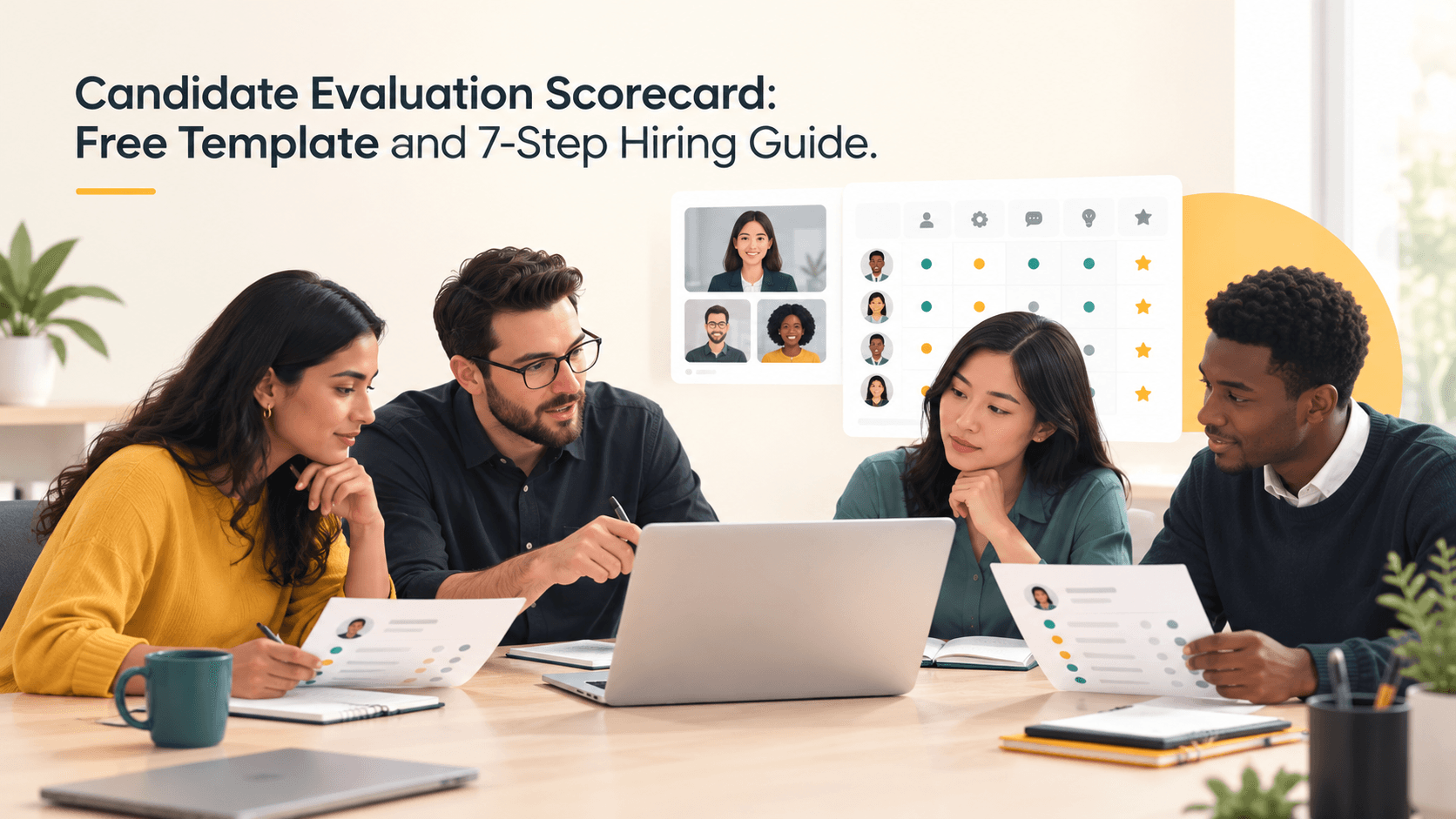
A fair process makes the job requirements explicit and gives candidates comparable opportunities to demonstrate them. This guide explains how distributed hiring teams can set criteria, run structured interviews, use scorecards, and review evidence consistently.
Key takeaways
- ✓Define a short list of job-related competencies before reviewing applicants.
- ✓Ask candidates applying for the same role comparable core questions and explain the process in advance.
- ✓Use behavior-based scorecard anchors and record evidence rather than impressions.
- ✓Have interviewers rate independently before a group discussion, then resolve differences with examples.
- ✓Make remote assessments accessible and offer a contact for technical issues or accommodation requests.
- ✓Review process outcomes periodically; a structured process supports consistency but does not guarantee bias-free decisions.
What does fair remote candidate evaluation mean?
Fair candidate evaluation means using criteria connected to the work, applying them consistently, and giving candidates a reasonable chance to provide relevant evidence. It does not mean every candidate must have an identical conversation: follow-up questions or accommodations may differ when needed, as long as the core competencies and standards stay comparable.
Remote interviews add practical considerations. A poor connection, unfamiliar video setup, or time-zone constraint can affect a conversation without reflecting job ability. Decide in advance how to handle interruptions, rescheduling, alternative formats, and recording consent. Do not treat a polished home office, camera quality, or eye contact with a webcam as a proxy for performance.
1. Define job-related criteria before interviews
Start with the outcomes and tasks the person will be responsible for. Translate them into observable competencies. For example, replace ‘strong communicator’ with ‘explains a decision in a clear sequence, checks understanding, and adapts detail to the audience.’ Replace ‘culture fit’ with the specific work behavior the team needs, such as sharing useful progress updates across asynchronous handoffs.
| Vague criterion | More useful criterion | Evidence to look for |
|---|---|---|
| Culture fit | Collaborates across asynchronous handoffs | Describes how they documented a decision and kept teammates informed |
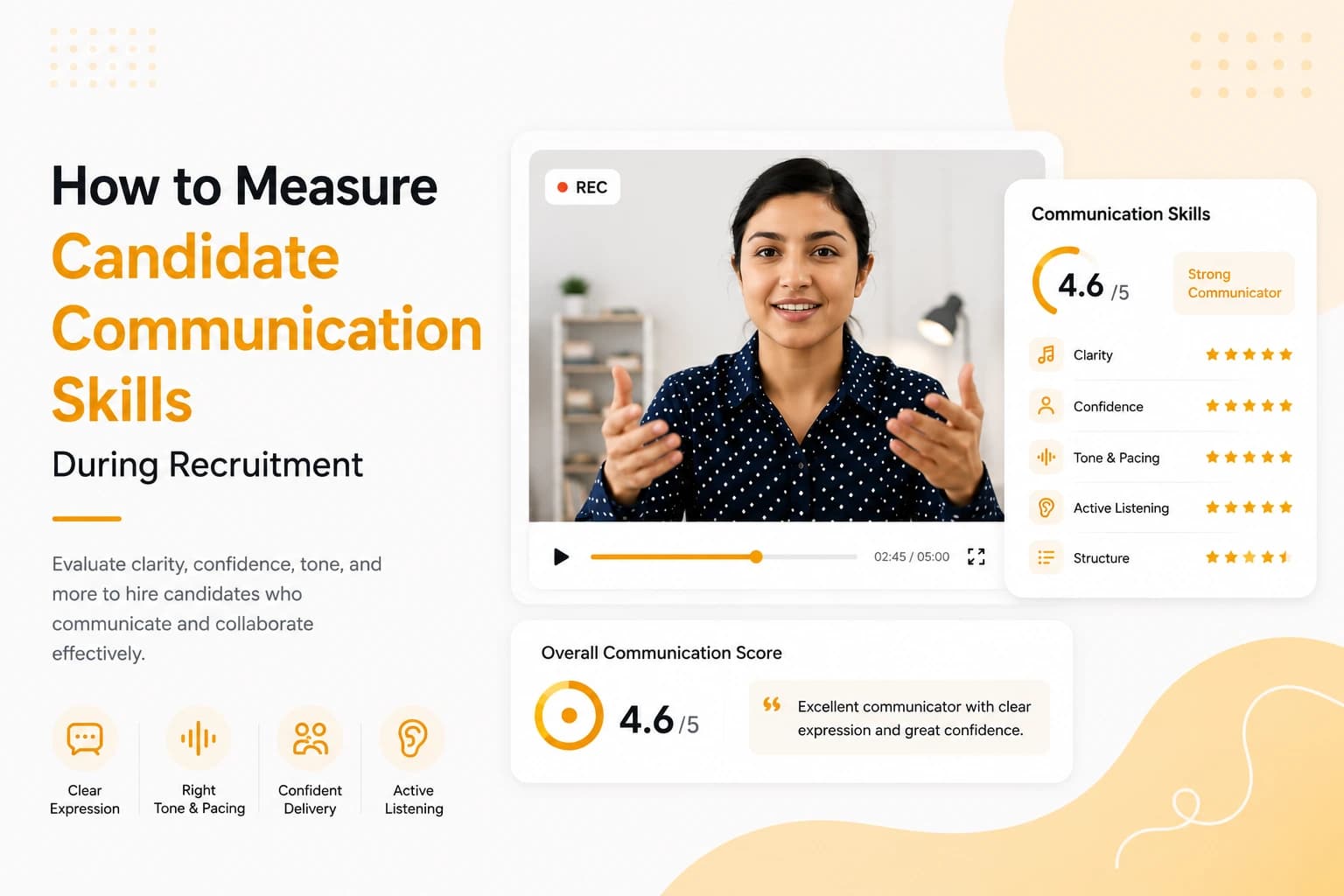
| Good communication | Explains complex information clearly | Gives a structured explanation and checks the listener's understanding |
| Rockstar / high potential | Prioritizes work against agreed goals | Explains trade-offs, constraints, and how progress was measured |
Choose only criteria that matter for the role and selection stage. A short, focused rubric is easier to apply consistently than a long list of loosely defined traits. OPM's structured interview guidance describes using job-related competencies, consistent questions, and rating standards.
2. Give candidates comparable opportunities to respond
Prepare a shared set of core questions or work samples for each role. Questions can be behavioral (asking about a past example) or situational (asking how someone would handle a realistic scenario). Give candidates the same essential instructions, time expectations, and information about the role. Interviewers can ask clarifying follow-ups, but should avoid giving one candidate coaching or context unavailable to others.
For remote teams, write down who asks each question, what follow-ups are allowed, and how to handle connection failures. If a candidate loses audio midway through a response, pause and offer a repeat or reschedule instead of scoring incomplete evidence as a weak answer. Provide an accommodation route before the assessment begins.
3. Score evidence with shared anchors
A scorecard should connect each competency to observable evidence and describe what different rating levels mean. For instance, a 1–5 scale for prioritization could range from ‘does not identify the key constraint’ to ‘prioritizes by impact, explains trade-offs, and communicates a workable plan.’ Define the scale before interviews so the standard does not shift from candidate to candidate.
| Rating | Example anchor for prioritization |
|---|---|
| 1 — Limited evidence | Does not identify the main goal or constraint; provides no workable next step. |
| 3 — Meets expectations | Identifies the main goal, gives a reasonable order of work, and explains a relevant trade-off. |
| 5 — Strong evidence | Prioritizes by impact and urgency, explains trade-offs, anticipates dependencies, and communicates a practical plan. |
Ask interviewers to note a short example or quote that supports each rating. A number without evidence is difficult to review and easy to mistake for certainty. Avoid using one overall ‘gut feel’ score to override specific job-related evidence.
4. Calibrate a distributed interview panel
Before the interview loop, review the rubric together using a sample response or scenario. Discuss what would count as evidence for each rating and which judgments should be excluded. After interviews, have panelists submit independent ratings before seeing one another's scores. This helps distinguish a real disagreement about evidence from group pressure or a senior person's first impression.
When scores differ, compare the notes against the agreed anchors. Ask: Which response supports this rating? Did we assess the same competency? Was the candidate given a fair chance to answer? Record the reason for a final decision, including uncertainty or missing evidence, rather than smoothing disagreements into an unexplained average.
5. Make remote assessments accessible and job-relevant
Use the format that measures the skill. A written task can assess written communication; a live collaboration exercise can assess real-time teamwork; an async video response can collect a spoken explanation. Do not use video presence or background appearance to judge unrelated capabilities. Tell candidates whether an exercise is timed, how long it should take, what tools are allowed, and how their submission will be used.
Keep exercises proportionate to the role and stage. If a task resembles real work and requires substantial effort, explain its scope and avoid using candidate work as unpaid production. Offer reasonable alternatives where the format creates an access barrier, while preserving the competency being assessed.
6. Review the process and improve it
After a hiring cycle, check whether interviewers used the rubric, whether candidates received comparable instructions, and where decisions relied on missing or conflicting evidence. Where lawful and appropriate, review aggregate outcomes across stages for patterns that warrant investigation. Protect candidate information, restrict access to evaluation records, and follow applicable privacy and employment rules in each hiring location.
A scorecard is a tool for making reasoning visible, not proof that a process is unbiased. If one criterion repeatedly produces disagreement or does not predict the work, revisit its definition. If a stage screens out candidates for reasons unrelated to role requirements, redesign or remove that stage.
A remote interview plan teams can reuse
A simple plan helps interviewers in different locations create a comparable experience. Before opening a role, write a one-page brief that names the competencies, the interview stages, the owner for each stage, and the evidence each stage is expected to gather. Share the brief with interviewers and recruiters, and use it to answer candidate questions consistently. The plan should be short enough to use during a busy hiring cycle, rather than a document that exists only for compliance.
For example, a product support role might use an initial written troubleshooting exercise, a structured conversation about customer situations, and a live collaboration session. The written task can assess clarity and diagnostic steps; the conversation can assess listening and judgment; the live session can assess how a candidate works through new information with another person. Each stage should add evidence that earlier stages could not provide. If two interviews measure the same thing, consider removing one or assigning it a distinct purpose.
Sample question set for a distributed team
Questions work best when they are tied to a defined competency and followed by a consistent scoring method. Use these examples as starting points, then adapt them to the actual responsibilities and level of the role. Avoid expecting candidates to guess what the team wants to hear; explain the scenario and any relevant constraints.
| Competency | Sample question | Evidence to listen for |
|---|---|---|
| Written communication | A teammate in another time zone has misunderstood a project decision. How would you clarify it in writing? | Clear context, direct correction, respectful tone, and a documented next step. |
| Prioritization | Two urgent requests arrive while you are finishing a committed task. What information would you use to decide what to do first? | Checks impact and deadlines, communicates trade-offs, and confirms ownership or timing. |
| Collaboration | Tell us about a time you resolved a disagreement with a teammate who had different information or constraints. | A specific example, curiosity about the other view, evidence used, and a constructive outcome. |
| Learning and adaptation | Describe a time a plan changed after you had started. How did you adjust and keep others informed? | Identifies what changed, reprioritizes, communicates implications, and reflects on the result. |
Give each interviewer a small number of questions to own so the panel does not rush through a long list. If a candidate has already answered a competency in another stage, note that evidence and avoid asking them to repeat the same story without a reason. Candidates should be assessed on the substance of their evidence, not on how familiar their phrasing or career path feels to the panel.
Use this scorecard format
A reusable scorecard can be a simple table in your hiring system. Include the competency, rating, evidence note, confidence level, and follow-up needed. Ask each interviewer to complete it soon after the conversation while details are fresh. A confidence field can distinguish a clear example from an incomplete answer; it should not become a substitute for the rating or a hidden measure of personality.
| Competency | Rating (1–5) | Evidence note | Confidence / follow-up |
|---|---|---|---|
| Role-specific skill | ___ | What did the candidate do, explain, or produce? | High / medium / low; clarify ___ |
| Communication | ___ | How did they organize information for the audience? | High / medium / low; clarify ___ |
| Collaboration | ___ | What actions did they take with teammates or stakeholders? | High / medium / low; clarify ___ |
| Prioritization | ___ | What trade-off or next step did they identify? | High / medium / low; clarify ___ |
Do not calculate a single average and treat it as the hiring answer. Some competencies may be essential, while others may be trainable or relevant only at a later stage. Agree on how the team will use ratings before reviewing candidates. If a must-have competency receives a low rating, look at the supporting evidence and whether the candidate had a fair opportunity to demonstrate it. If the panel lacks evidence, design a targeted follow-up instead of filling the gap with assumptions.
How to handle common remote interview situations
Connection drops or audio becomes unusable
Pause the interview and check whether the candidate wants to reconnect, switch to an agreed backup channel, repeat the response, or reschedule. Record the interruption as a technical issue, not as evidence about communication or preparation. If the interruption prevents a competency from being assessed, mark it as not assessed and plan a fair way to gather that evidence later.
An interviewer asks an unplanned question
A natural follow-up can help clarify evidence, but a new question may introduce a different level of difficulty or give one candidate extra coaching. Interviewers should write down material follow-ups and share them with the hiring lead. If the follow-up tests a required skill, consider whether other candidates need a comparable opportunity to answer it.
Panel members strongly disagree
Ask each person to point to the specific response or work sample behind their rating. Compare that evidence with the anchor, and separate what was observed from assumptions about motivation, confidence, or personality. If the rubric does not resolve the difference, record the uncertainty and agree on a job-related next step. A disagreement can reveal that the criterion or interview question needs clearer definition.
A candidate requests a different format
Ask what adjustment would let the candidate demonstrate the relevant skill, following your organization's accommodation process and applicable requirements. Keep the competency and standard consistent while making the method accessible where possible. For example, if the role requires clear written customer updates, a different screen reader-compatible document format can preserve the assessment goal.
Candidate communication is part of a fair process
Candidates cannot prepare or participate effectively when instructions are vague. Before each stage, share the expected duration, format, names or roles of interviewers where appropriate, topics or competencies being assessed, whether notes or recordings will be used, and how to request an adjustment. Avoid surprise assignments or undisclosed monitoring. Tell candidates when they can expect an update, and contact them if the timeline changes.
Clear communication also helps teams distinguish candidate behavior from process friction. If someone misunderstands an instruction, first check whether the instruction was complete and accessible. If a candidate is late because a calendar invitation used the wrong time zone, correct the scheduling issue rather than turning it into a negative rating. A fair process accounts for operational mistakes instead of assigning them to applicants.
Run a short interviewer calibration session
Calibration does not need a long workshop. A 30-minute session before a hiring round can align a distributed panel: review the job outcomes, read each competency and anchor aloud, score one sample answer independently, and compare the evidence notes. Discuss where ratings differ and clarify what the team means by terms such as ‘clear,’ ‘independent,’ or ‘collaborative.’ Save the updated rubric where all interviewers can find it.
Repeat calibration when the role changes, when new interviewers join, or when the team sees recurring disagreements. Do not change a rubric midway through a candidate group without documenting the change and considering whether candidates already assessed need another opportunity. For recurring roles, anonymized examples of evidence can help new panelists understand the anchors without disclosing unnecessary candidate information.
Measure consistency without reducing people to a number
Useful process checks include whether interviewers completed scorecards, whether candidates received the planned stages, how often criteria were marked not assessed, and whether panels repeatedly disagree on one competency. These measures can reveal process problems. They do not tell you, by themselves, whether a candidate is qualified or whether a hiring decision is fair.
When reviewing aggregate outcomes, use appropriate safeguards and qualified guidance for the regions where you hire. Small groups can make individuals identifiable, and employment data may be sensitive. Limit access, use data for a defined purpose, and avoid drawing causal conclusions from a small sample. Where a pattern raises concern, investigate the stage and criteria with people who understand the legal, operational, and accessibility context.
Common mistakes to avoid
These mistakes are often process issues rather than individual intent. Teams can reduce them by making the interview plan visible, assigning question ownership, capturing independent ratings, and asking for evidence behind conclusions. When a rule creates friction or fails to measure the job, update the rule and explain the change to interviewers.
A practical remote hiring fairness checklist
- ✓Write down the role competencies and evidence expected for each one.
- ✓Use comparable core questions, instructions, and time expectations for candidates in the same stage.
- ✓Define rating anchors and collect evidence notes before panel discussion.
- ✓Agree on a connection-failure and rescheduling process.
- ✓Offer an accommodation contact and explain assessment formats in advance.
- ✓Document decisions and review the process for inconsistent criteria or avoidable barriers.
How VideoPitcher can support structured remote screening
VideoPitcher lets hiring teams collect video and text assessment responses and review them with shared criteria. Teams can use it to organize first-round evidence asynchronously, then decide which candidates need a live conversation or job-related exercise. AI-generated insights should be checked against the original response; hiring teams remain responsible for evaluation and decisions. Learn more about video screening software or see pricing.
Frequently asked questions
Answers to common questions about evaluating candidates across distributed hiring teams.
Build a more consistent remote interview process
Fair remote hiring starts with role-related criteria, comparable opportunities to respond, and evidence-based ratings. Calibrate the panel, make assessments accessible, and review how the process works after each hiring cycle. For a practical way to collect structured responses, explore VideoPitcher's video screening workflow.
Scorecard — implementation checklist
- Define job-related competencies and observable evidence for the role.
- Prepare comparable core questions, instructions, and time expectations.
- Create shared behavior-based rating anchors before interviews begin.
- Have interviewers record independent evidence-based ratings.
- Discuss score differences using the rubric and document the decision.
- Review accessibility, candidate feedback, and process outcomes after the hiring cycle.
Frequently asked questions
How can remote hiring teams evaluate candidates fairly?+
Define job-related criteria before interviews, ask candidates for the same role comparable core questions, and score evidence against shared behavior-based anchors. Have interviewers rate independently before discussion, explain assessment expectations in advance, and provide an accommodation and technical support route.
Do structured interviews eliminate hiring bias?+
No. Structured interviews can make criteria and evidence more consistent and visible, but they do not guarantee a bias-free process. Teams should use job-related criteria, review outcomes and interviewer decisions, and revise steps that create avoidable barriers or rely on irrelevant impressions.
How do you calibrate interviewers across time zones?+
Share the rubric and question plan in advance, practice rating a sample response together, and agree on what evidence supports each rating. After interviews, collect independent scores before group discussion and resolve differences by referring to the same behavior-based anchors.
What should a remote interview scorecard include?+
A useful scorecard lists a small set of job-related competencies, the evidence each competency measures, behavior-based rating anchors, space for specific examples, and a way to mark a skill as not assessed. Keep the rubric consistent for candidates in the same role and stage.
Should candidates use video for every remote assessment?+
No. Choose the format that measures the skill: text for written communication, video for a spoken explanation, and a live exercise for real-time collaboration. Explain the format and expectations ahead of time, avoid judging unrelated video or home-office traits, and offer reasonable alternatives when needed.
Can AI decide which remote candidate to hire?+
AI tools may help organize or summarize candidate information, but the hiring team should verify outputs against original materials and make accountable decisions using job-related criteria. Do not treat an automated score as an unexplained final decision.
Written by VideoPitcher Team
Recruitment Product & Research
The VideoPitcher team writes about hiring workflows, candidate assessment, and what we learn building the product.
Published November 3, 2026
Keywords covered
Related resources
Give every candidate a clearer evaluation process
Collect structured video and text responses and review candidate evidence with your team.