How AI Is Helping Companies Hire Better Talent Faster
AI is transforming recruitment by speeding up screening, improving candidate matching, reducing bias, and helping hiring teams make faster, smarter decisions at scale.
Discover how AI-powered hiring tools accelerate candidate screening, improve match quality, reduce bias, and help recruiting teams hire faster without sacrificing accuracy.
Hiring teams today are under more pressure than ever. Job openings attract hundreds or even thousands of applicants, while business leaders expect roles to be filled in weeks, not months. Traditional hiring methods, manual resume reviews, scheduling back-and-forth, and unstructured interviews, simply can't keep pace with this volume.
Artificial intelligence is changing that equation. Across sourcing, screening, interviewing, and decision-making, AI is helping recruiting teams move faster while actually improving the quality of who they hire. Instead of choosing between speed and accuracy, companies using AI are increasingly getting both.
This shift isn't just about adopting a new tool, it reflects a broader change in how recruiting teams operate day to day. Recruiters who once spent the bulk of their week on resume triage and calendar coordination are now spending more of it on judgment calls that actually require a human: assessing culture fit, negotiating offers, and building relationships with candidates worth fighting for.
Candidates are adjusting too. Many now expect at least part of the hiring process to involve AI, whether that's an automated first-round screen, a chatbot answering questions about the role, or an assessment scored algorithmically. The companies getting the most value out of AI hiring tools are the ones that pair that automation with clear communication, so candidates understand what's evaluating them and why.
In this guide, we'll break down exactly how AI is reshaping the hiring process, where it delivers the biggest gains, what the data actually shows, and what companies should keep in mind as they adopt it.
AI-Powered Sourcing Widens the Talent Pool
Traditional keyword-based searches often miss strong candidates simply because their resume doesn't use the exact phrasing a recruiter searched for.
AI sourcing tools use semantic search to understand skills, context, and career trajectory rather than just matching keywords. This surfaces qualified candidates, including passive ones, who would otherwise stay invisible to recruiters relying on Boolean search alone.
The impact shows up in the numbers recruiters care about most: more relevant profiles per search, fewer false positives, and significantly less time spent manually digging through job boards to find people who were never going to apply on their own.
Automated Screening Cuts Time-to-Shortlist Dramatically
Reviewing hundreds of resumes by hand is one of the biggest bottlenecks in hiring. Recruiters can spend days on a task that doesn't require human judgment at all.
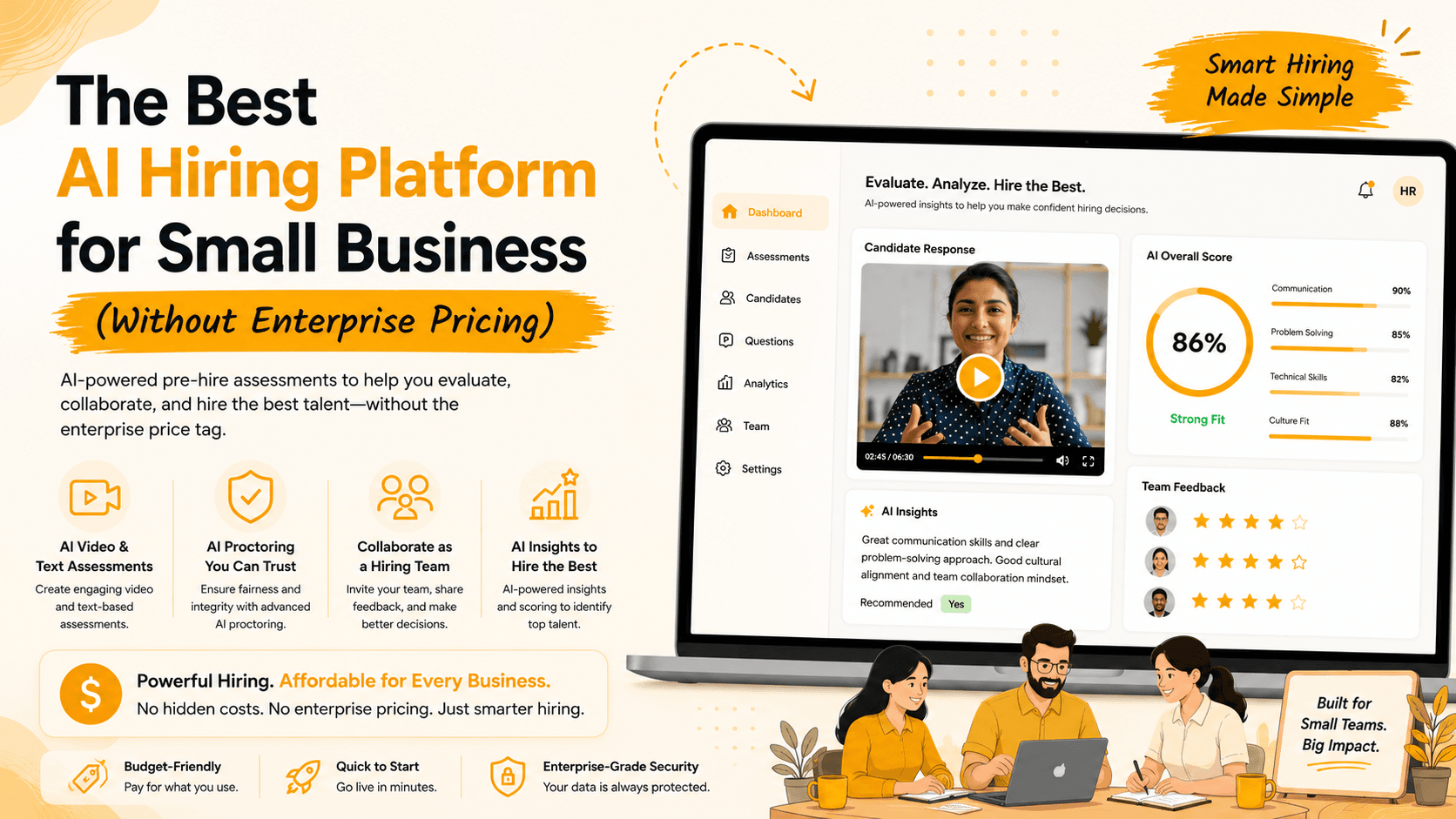
AI screening tools evaluate resumes, assessments, and video responses against job requirements in minutes, not days. This lets recruiters spend their limited time on final-stage conversations with the most relevant candidates instead of sorting through every applicant manually.
For high-volume roles, this compounds quickly. A single recruiter using AI-assisted screening can realistically manage a candidate pool that would have previously required two or three additional team members, without sacrificing the consistency of how each applicant gets evaluated.
AI Interview Tools Speed Up Early-Stage Evaluation
Coordinating interview schedules across candidates, hiring managers, and panels is notoriously slow and is one of the largest time drains in recruiting.
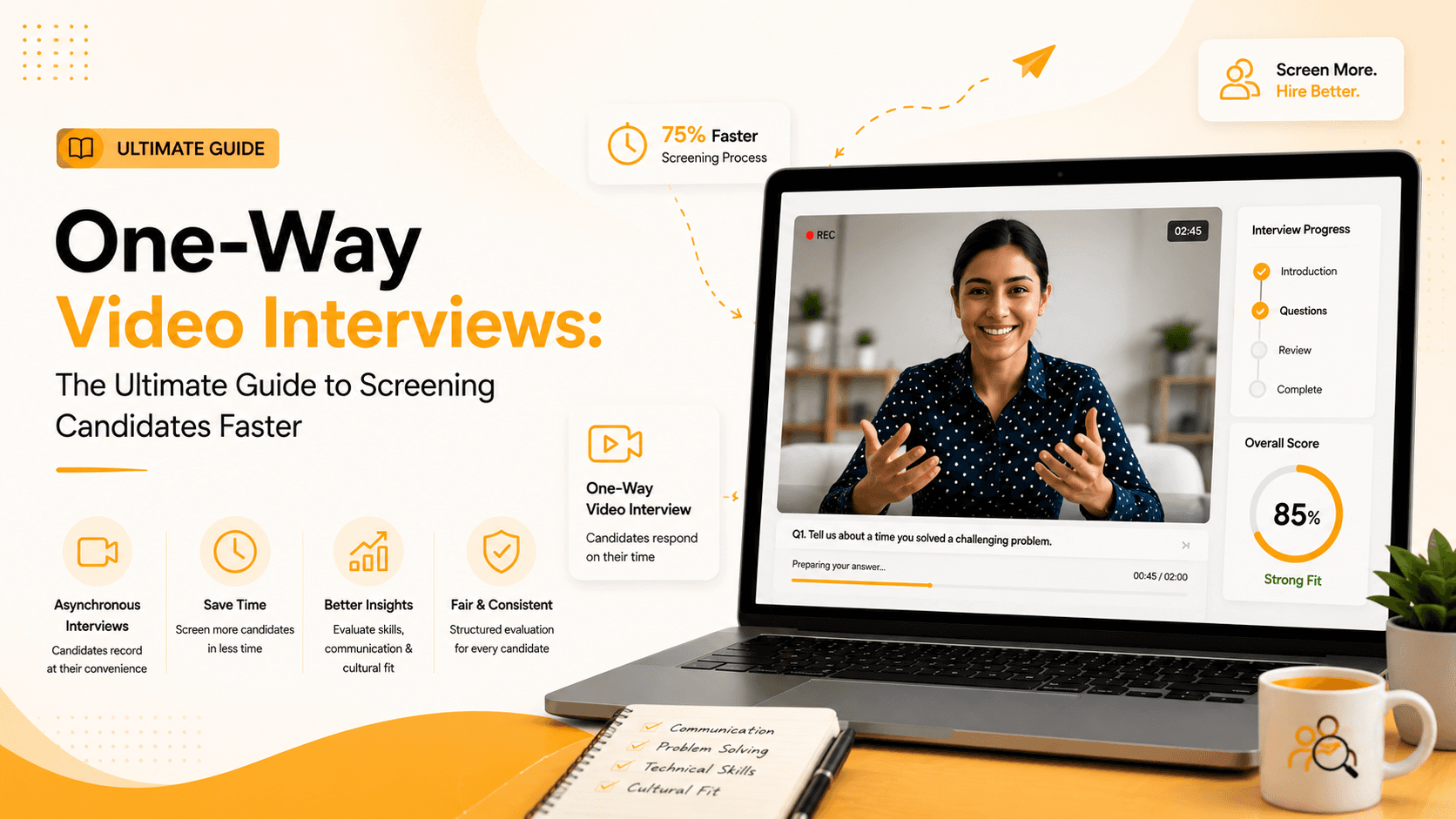
AI-powered scheduling and one-way video interviews remove this friction entirely. Candidates can respond on their own time, and hiring teams can review responses asynchronously, compressing what used to take days into hours.
This format also tends to standardize the candidate experience itself, every applicant gets the same questions, in the same order, under the same time limits, which makes side-by-side comparison far easier for hiring managers than reconciling notes from inconsistent live interviews.
Skills-Based Matching Improves Quality of Hire
Resumes are an imperfect proxy for ability. Titles and years of experience don't always reflect what someone can actually do on the job.
AI matching models evaluate demonstrated skills, assessment performance, and career patterns to predict job fit more reliably than resume screening alone. This shifts hiring decisions toward evidence of capability rather than credentials.
This is especially valuable for candidates with nontraditional backgrounds, career switchers, self-taught practitioners, or people returning to the workforce, whose resumes alone often understate what they're actually capable of doing.
Structured AI Evaluation Helps Reduce Hiring Bias
Unstructured interviews and subjective resume reviews leave plenty of room for unconscious bias to creep into hiring decisions.
When implemented carefully, AI applies the same evaluation criteria to every candidate, creating more consistency than ad hoc human judgment. This isn't automatic, bias testing and human oversight are still essential, but standardized, criteria-based evaluation is a meaningful improvement over inconsistent manual review.
It's worth being clear-eyed here: poorly designed AI tools can also introduce or amplify bias if they're trained on skewed historical hiring data. The companies that get this right treat bias auditing as an ongoing process, not a one-time checkbox before launch.
Predictive Insights Support Better Decision-Making
Hiring managers often make decisions based on gut feeling, which can be inconsistent across interviewers and roles.
AI-driven analytics give recruiters and hiring managers visibility into which candidates, sources, and assessment patterns actually correlate with strong performance and retention. This turns hiring into a more data-informed process instead of a series of one-off judgment calls.
Over time, this feedback loop also helps teams refine their own hiring criteria. If a particular assessment score or sourcing channel consistently predicts long-term success, that signal can be weighted more heavily in future searches, while criteria that don't correlate with performance can be dropped.
AI Scales Hiring Without Scaling Headcount
High-volume hiring used to mean adding more recruiters to handle more applicants. That math doesn't hold up when application volume keeps climbing.
AI lets a single recruiting team manage significantly larger candidate pools without a proportional increase in workload. Repetitive tasks get automated, freeing recruiters to focus on the relationship-driven parts of hiring that AI can't replace.
This is especially valuable for seasonal hiring, retail and hospitality surges, or rapid headcount growth after funding rounds, situations where the alternative is either burning out a small recruiting team or scrambling to hire temporary recruiters who need to be trained from scratch.
AI Improves the Candidate Experience, When Done Right
Slow, opaque hiring processes frustrate candidates and cause strong applicants to drop out before a decision is even made.
AI-powered chat and scheduling tools can cut candidate response times from days to under 24 hours, while letting applicants choose interview formats and times that fit their schedule rather than waiting on recruiter availability. For candidates, a faster and more predictable process often matters as much as the outcome itself.
The caveat is real: many candidates remain skeptical of AI-driven hiring decisions, especially when they don't understand how they're being evaluated. Companies that explain what's automated, what's human-reviewed, and how decisions get made tend to see meaningfully better candidate satisfaction than those that deploy AI silently.
The Best Results Come From Pairing AI With Human Judgment
It's tempting to treat AI as a fully autonomous hiring engine, but the organizations seeing the strongest outcomes are the ones treating it as a force multiplier for recruiters, not a replacement for them.
AI is excellent at the structured, repeatable parts of hiring: screening, scoring, scheduling, and surfacing patterns across large applicant pools. It's far less reliable at judgment calls that require context AI doesn't have, like assessing how someone will mesh with a specific team or weighing a nontraditional career path that doesn't fit a standard pattern.
The practical approach most hiring teams land on is straightforward: let AI handle volume and consistency, and keep a person accountable for every final decision. That combination tends to produce faster hiring without the credibility and compliance risks of a fully automated process.
Scorecard — implementation checklist
- Use AI sourcing to expand candidate pools beyond keyword matches
- Automate resume and assessment screening for repetitive, high-volume tasks
- Use async video interviews to remove scheduling bottlenecks
- Pair AI scoring with structured, skills-based evaluation criteria
- Run regular bias audits on AI tools used in hiring decisions
- Keep a human reviewer in the loop for every final hiring decision
- Track quality-of-hire and retention data to validate AI-driven decisions
- Communicate clearly with candidates about where and how AI is used
- Review AI vendor compliance with relevant hiring regulations in your region
- Pilot new AI tools on a single role or team before rolling out company-wide
Frequently asked questions
How is AI used in hiring today?+
AI supports sourcing, resume screening, candidate communication, interview scheduling, video interview analysis, and skills assessment, helping recruiters manage every stage of hiring more efficiently.
Does AI actually reduce time-to-hire?+
Yes. Companies using AI-powered hiring workflows commonly report reductions in time-to-hire of 25-50%, driven mainly by faster screening and scheduling.
Can AI improve the quality of candidates hired, not just speed?+
When paired with skills-based assessments and structured evaluation criteria, AI helps surface candidates based on demonstrated ability rather than resume keywords alone, which can improve match quality and retention.
Does using AI in hiring introduce bias risk?+
It can if tools aren't properly tested. AI hiring tools should be regularly audited for bias and paired with human oversight to ensure fair outcomes across candidate groups.
Is AI replacing recruiters?+
No. AI automates repetitive, high-volume tasks like screening and scheduling, but most hiring teams report that human judgment remains essential for final decisions and candidate relationships.
How should companies handle candidate concerns about AI in hiring?+
Transparency matters. Clearly communicating what parts of the process are AI-assisted, how candidates are evaluated, and where a human makes the final call tends to improve candidate trust and satisfaction significantly.
Are there legal requirements for using AI in hiring?+
Increasingly, yes. Regulations such as the EU AI Act and local laws like NYC's Local Law 144 require bias audits, transparency disclosures, and human oversight for automated hiring tools, so companies should confirm their AI vendor supports compliance in every region they hire.
Written by VideoPitcher Team
Recruitment Product & Research
The VideoPitcher team writes about hiring workflows, candidate assessment, and what we learn building the product.
Published June 23, 2026
Keywords covered
Related resources
Ready to transform your hiring process?
Start using VideoPitcher today with 20 FREE AI Video Screening Credits, plus Unlimited AI Resume Analysis and Unlimited Text Screening Assessments. No credit card is required—just start screening smarter and find the right candidates faster.